
Is Sushi Healthy? Benefits, Risks, and Best Rolls (2026)
Is sushi healthy? Yes, if you choose simple rolls with fresh fish, vegetables, and plain rice.
If you wonder is sushi good for you, the answer depends on what is inside the roll. A salmon nigiri is very different from a deep-fried tempura roll with spicy mayo.
This guide gives you the short answer first, then the full picture. It covers nutrition, calories, mercury, sodium, rice, raw fish risks, weight loss, and smart ordering.
Fresh update for 2026: The Dietary Guidelines for Americans 2025-2030, released on 7 January 2026, recommends 3 or more servings of seafood a week for most adults. That puts simple sushi in a good place, if you pick low-mercury fish.
This article is general information only. It is not medical advice. Talk to your doctor if you are pregnant, have a health condition, or take medicine that affects fish intake.
Short Answer
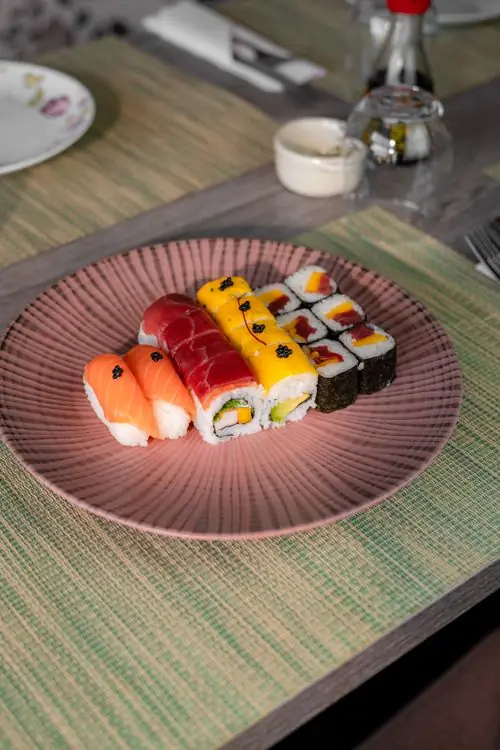
Yes, simple sushi is healthy. It gives you lean protein, omega-3 fats, iodine, and vegetables for relatively few calories.
No, not all sushi is healthy. Fried rolls, cream cheese rolls, and rolls covered in sweet sauce can have 450 to 600 calories. That is more like fast food than a light meal.
The rule is simple. More fish and vegetables, less fried coating, less sauce, less rice. That one rule fixes most orders.
What Is Sushi?
Sushi is vinegared rice combined with fish, seafood, vegetables, or egg. It is often wrapped in nori, a type of seaweed.
The rice is the base. The fish and vegetables decide if the meal is light or heavy. The sauce decides if it stays light.
Nigiri
Nigiri is a small mound of rice topped with a slice of fish. Salmon nigiri and tuna nigiri are the most common.
It is a good choice because you get more fish and less rice than in a big roll. One piece is about 35 to 40 calories for salmon.

Sashimi
Sashimi is thinly sliced raw fish served without rice. It is not technically sushi, but most menus list it with sushi.
It is the leanest option. You get protein and omega-3 fats with almost no carbs. A 4-ounce portion of salmon or tuna sashimi gives you about 23 to 28 grams of protein.
Maki Rolls
Maki is a roll of rice, fish, and vegetables wrapped in nori and cut into 6 to 8 pieces. Salmon roll, tuna roll, and cucumber roll are simple maki.
Simple maki is healthy. The problems start when the roll is fried or filled with cream cheese.
Temaki and Uramaki
Temaki is a hand roll shaped like a cone. It usually uses less rice than maki, which helps with calories.
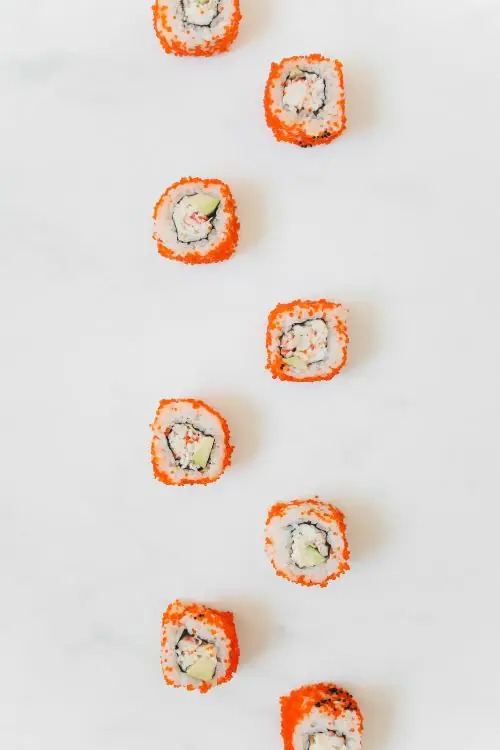
Uramaki is an inside-out roll with rice on the outside. California roll is the best-known uramaki. It is fine if you skip heavy sauces.
Sushi Nutrition Facts
Sushi nutrition changes a lot by roll. A simple roll can be 140 calories. A specialty roll can be 500 calories.
The main nutrients are protein from fish, carbs from rice, healthy fats from fish and avocado, and minerals from nori.
One cup of short-grain white rice has about 53 grams of carbohydrates. That is why rice portion matters more than most people think.
Calories, Protein, Carbs, and Fat
This table shows when is sushi healthy and when it is not, based on calories and protein.
| Roll, 6-8 pieces | Calories | Protein | Why It Ranks Here |
|---|---|---|---|
| Cucumber Roll | 135-180 | 2-3 g | Lowest calories, mostly vegetables |
| Avocado Roll | 140-200 | 3-5 g | Healthy fats, low protein |
| Tuna Roll | 180-250 | 15-20 g | Lean fish, simple, filling |
| Salmon Roll | 200-260 | 12 g | Omega-3 fats, good protein |
| Salmon Avocado Roll | 280-350 | 13 g | Healthy fats, more calories |
| California Roll | 250-350 | 9 g | Imitation crab, avocado, cucumber |
| Rainbow Roll | 350-450 | 20-24 g | Many fish, more rice and sauce |
| Philadelphia Roll | 400-500 | 14 g | Cream cheese adds saturated fat |
| Tempura Roll | 450+ | 12 g | Fried batter adds fat and calories |
| Sashimi, 6 pieces, no rice | 140-200 | 25-30 g | Pure protein, no rice |
Use this table when you order. Pick from the top half for a light meal. Pick from the bottom half only as a treat.
What Is in Sushi Rice?
Sushi rice is white short-grain rice seasoned with rice vinegar, sugar, and salt. That seasoning adds calories and sodium.
One roll can have 120 to 140 calories just from rice. Brown rice sushi has more fiber and a lower glycemic impact, but the calorie difference is small, about 20 to 30 calories per meal.
If you want fewer carbs, ask for less rice, choose sashimi, or order a Naruto-style roll wrapped in cucumber instead of rice.
Health Benefits of Sushi
Sushi can be a balanced meal in one plate. You get carbs, protein, and healthy fats together, plus vegetables and seaweed.
It works best when you add a side. Miso soup and edamame add fiber, protein, and vegetables without many calories.
A real example: miso soup, half a cup of edamame, a 6-piece tuna roll, and 4 pieces of salmon nigiri is about 500 calories and 40 grams of protein. That is a full meal, not a snack.
Omega-3 Fatty Acids for Heart and Brain
Salmon, mackerel, and tuna are rich in omega-3 fats. These fats help reduce inflammation and support heart and brain health.
The American Heart Association links omega-3 fats from fish to better heart health. Salmon is the best sushi source because it is also low in mercury.
You do not need a supplement to get this benefit. Two to three fish meals a week is enough for most adults.
Lean Protein for Muscle and Fullness
Fish is a complete protein. It has all the essential amino acids your body needs for muscle repair.
Eight pieces of tuna nigiri give you about 28 grams of protein for only 220 calories. That is a better protein-to-calorie ratio than most meat dishes.
Protein also keeps you full. That is why a sushi meal with sashimi feels more satisfying than the same calories from bread or pasta.
Vitamins, Minerals, and Iodine from Nori
Nori is rich in iodine, which supports normal thyroid function. It also gives you folic acid, niacin, calcium, and vitamins A, C, and K in small amounts.
Fish gives you vitamin D, vitamin B12, selenium, and iron. Salmon is a strong source of vitamin D, which many people lack in winter.
Avocado adds potassium and monounsaturated fat. Cucumber and carrots add fiber, water, and crunch with very few calories.
Gut Health and Antioxidants
Pickled ginger, wasabi, and seaweed contain antioxidants. Ginger also aids digestion, which is why it is served with raw fish.
Miso soup is a fermented food. It can support gut health, along with the fiber from vegetables and seaweed in the meal.
This does not make sushi a medicine. It means the small sides on the plate add real value, not just flavor.
Healthiest Sushi Rolls to Order
These healthiest sushi rolls are simple, fresh, and free from fried coating and heavy sauce. They are the safest default order.
Which sushi is the healthiest?
Sashimi is the healthiest choice, then nigiri, then simple salmon or tuna rolls. They give you the most protein for the fewest calories, with no fried coating or creamy sauce.
Start with this list when you order:
- Sashimi, salmon or tuna, 6 pieces
- Salmon nigiri, 4 pieces
- Tuna roll, 6 pieces
- Salmon avocado roll, 6 pieces
- Cucumber roll, 6 pieces, as a light side
Add edamame and miso soup to the order. That adds protein and fiber and helps you eat less rice.
Worst Sushi Rolls to Avoid
Some rolls look healthy but are not. They hide calories in batter, cheese, and sauce.
Philadelphia roll is a good example. It has salmon and avocado, but cream cheese adds saturated fat and cholesterol with few nutrients.
Shrimp tempura roll is another trap. Shrimp itself is lean, but tempura batter adds 100 to 200 extra calories and a lot of fat.
Dragon roll is often eel with a sweet, calorie-heavy sauce. Eel has protein and omega-3 fats, but the sauce and the roll size push the calories up fast.
Rainbow roll can be healthy in a small portion, but it is often large and topped with sauce. Eat it in moderation, not as your only roll.
If a roll name has crispy, crunchy, tempura, or volcano in it, it is usually fried or covered in sauce. Skip it for a daily meal.
Is Sushi Healthy for Weight Loss?
Yes, sushi can work for weight loss if you pick sashimi, nigiri, and simple rolls, and add edamame or salad. It fails when you pick fried rolls and eat 2 to 3 rolls alone.
Most sushi meals are light on fiber and protein if you eat only rolls. That is why you feel hungry again an hour later.
Fix it by building the meal. Add vegetables, pick sashimi for protein, and keep rice to one roll.
Check your daily calorie target with our TDEE calculator before you order. A 500-calorie sushi meal fits easily into most calorie deficit plans, a 900-calorie fried meal does not.
Ask for less rice, choose a Naruto-style cucumber wrap, and use low-sodium soy sauce sparingly. Those three changes can save 150 to 250 calories without changing the fish you love.
Is Sushi Healthy to Eat Every Day?
For most healthy adults, yes, if you vary the fish and keep tuna to 1 serving a week. Eating the same high-mercury fish every day is the problem, not sushi itself.
If you eat sushi every day, rotate the fish. Use salmon, shrimp, and vegetable rolls most days. Save yellowfin tuna for once a week.
Also watch sodium and rice. Daily sushi with heavy soy sauce can push sodium over 2,000 mg in one meal. That causes water retention and bloating.
For healthy adults, 2 to 4 times a week is a comfortable range. Daily is possible, but only with simple rolls and varied fish.
Sushi and Mercury: How Much Is Safe?
Mercury is the main safety issue with sushi. It builds up more in large, long-lived fish.
The FDA and EPA advise 8 to 12 ounces of low-mercury fish a week for adults. That is 2 to 3 servings of 4 ounces each from the Best Choices list.
Salmon is a Best Choice. Yellowfin tuna and albacore tuna are Good Choices, limited to 1 serving a week. Bigeye tuna, swordfish, shark, king mackerel, and marlin are Choices to Avoid.
The gap is large. Fresh salmon averages 0.022 ppm mercury. Fresh yellowfin averages 0.354 ppm. That is about 16 times higher.
| Fish | Mercury, ppm | FDA/EPA Category | Servings Per Week |
|---|---|---|---|
| Salmon, fresh | 0.022 | Best Choices | 2-3 |
| Canned Light Tuna, skipjack | 0.126 | Best Choices | 2-3 |
| Yellowfin Tuna | 0.354 | Good Choices | 1 |
| Albacore Tuna | 0.350 | Good Choices | 1 |
| Bigeye Tuna | 0.689 | Choices to Avoid | Skip |
| Swordfish | 0.995 | Choices to Avoid | Skip |
Formula for the weekly limit:
Weekly mercury limit = 0.1 mcg x body weight in kg x 7 days
For a 75 kg adult: 0.1 x 75 x 7 = 52.5 mcg per week. That is the EPA reference dose behind the FDA categories.
A real case study helps here. In 2023, Consumer Reports tested 30 canned tuna samples across 5 brands. Mercury levels varied a lot from can to can, even within the same brand. Averages are a guide, not a guarantee for one can or one piece.
For full official advice, see FDA Advice About Eating Fish.
Sushi and Sodium: The Soy Sauce Problem
Soy sauce is the hidden sodium bomb in sushi. One tablespoon has about 900 mg of sodium.
If you dip generously, you can hit 1,500 to 2,000 mg in one meal. The daily limit for most adults is 2,300 mg.
Sushi rice, pickled ginger, and imitation crab also add sodium before you even touch soy sauce.
The fix is simple. Use low-sodium soy sauce, dip the fish side only, not the rice, and use wasabi and ginger for flavor instead.
For official sodium guidance, see CDC About Sodium and Health.
Sushi Rice: White Rice vs Brown Rice
White rice is the standard for sushi. It is soft, sticky, and easy to roll. It is also refined, so it has less fiber.
Brown rice sushi has more fiber, more B vitamins, magnesium, and selenium. It also has a lower glycemic impact, which helps with blood sugar control.
The calorie difference is small. Do not pick brown rice just for calories. Pick it for fiber and fullness.
If blood sugar is your main concern, sashimi is the best fix. It has no rice at all.
Raw Fish Risks: Parasites and Bacteria
Raw fish can carry parasites, Salmonella, or Listeria. The risk is low from a reputable restaurant, but it is not zero.
Fish that was previously frozen is safer, because freezing kills most parasites. Ask the restaurant if their fish is sushi-grade and previously frozen.
Eat sushi the same day you buy it. Do not leave raw fish at room temperature for hours.
Wash your hands, use clean chopsticks, and avoid sushi from a place that looks unclean or smells off. Fresh fish should smell like the sea, not strong or sour.
Who Should Avoid Raw Sushi?
Some people should avoid raw fish completely. This includes people who are pregnant, trying to become pregnant, breastfeeding, immune-compromised, young children, and older adults with weak immunity.
For these groups, cooked sushi is the safe option. Cooked shrimp, cooked eel, cooked crab, and vegetable rolls are good choices.
Pregnant people should also limit high-mercury fish, even when cooked. Choose salmon, shrimp, and cod from the Best Choices list.
This section is general information only. Talk to your doctor for personal advice if you are in one of these groups.
How to Order Healthy Sushi at a Restaurant
Many people ask, is sushi healthy at a restaurant? This table shows the swaps that make it healthy.
| Instead of This | Order This Instead | Why It Helps |
|---|---|---|
| Tempura roll | Salmon nigiri | Saves 150-200 calories, no batter |
| Philadelphia roll | Salmon avocado roll | No cream cheese, healthy fats stay |
| Spicy mayo roll | Tuna roll + wasabi | No creamy sauce, less fat |
| Large white rice roll | Naruto cucumber wrap | Less rice, more crunch |
| Sweet eel sauce | Plain fish + ginger | Less sugar, less sodium |
| 3 fried rolls | 1 simple roll + sashimi | More protein, fewer calories |
Use this rule when you order: more fish, less fried stuff. Start with edamame, order a mix of nigiri, add one simple roll. If you are still hungry, get more sashimi, not more rice rolls.
That meal is about 450 to 550 calories with plenty of protein. You will feel full without feeling heavy.
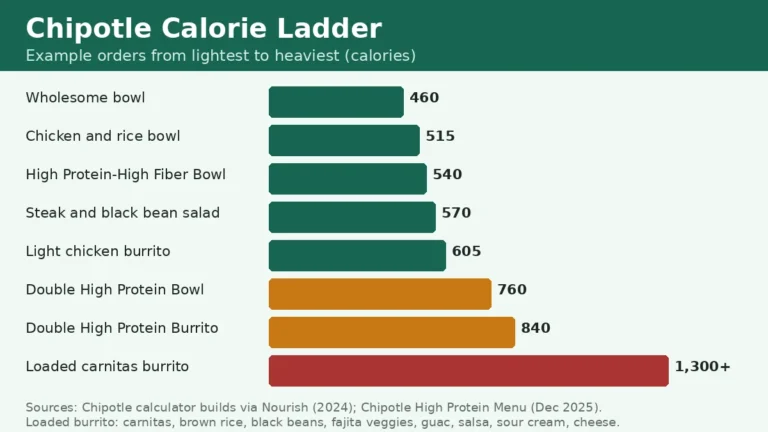
For a similar healthy fast food comparison, see Is Chipotle Healthy.
How to Make Healthy Sushi at Home
Making sushi at home gives you full control. You decide the rice, the fish, and the sauce.
Buy sushi-grade fish from a trusted fishmonger. Keep it cold, use it the same day, and use clean hands and a clean board.
Use short-grain brown rice for more fiber, or use half rice and half cauliflower rice for fewer carbs. Add cucumber, avocado, and carrots for crunch.
Skip spicy mayo. Use low-sodium soy sauce, wasabi, and pickled ginger instead. You will save calories and sodium without losing flavor.
How Long Does Sushi Last in the Fridge?
Sushi with raw fish lasts up to 2 days in the fridge, at 40°F or less. Eat it as soon as you can for best taste and safety.
Sushi with cooked fish or vegetables lasts a little longer, but it dries out fast. Rice gets hard in the fridge.
Supermarket sushi should be eaten the same day. Check the made-on date. If it looks dry or smells off, skip it.
Do not freeze leftover sushi. The rice and fish texture will not recover well.
Sushi vs Other Fast Food
Sushi is often healthier than other takeaway, if you pick simple rolls.
A salmon maki, 8 pieces, has about 290 calories and 24 grams of protein. A Big Mac has 563 calories with much more fat and sodium.
A Pret tuna baguette has about 470 calories. A full Caesar salad can have 420 calories and more sodium than sushi.
The difference is nutrition for the calories. Sushi gives you protein, omega-3 fats, and real nutrients. Many fast food meals give you mostly filler.
For more light fast food ideas, see 10 healthy fast food orders.
For a crunchy snack comparison see Are PopCorners Healthy?
Common Mistakes People Make With Sushi
A common mistake is thinking, “is sushi healthy?” just because it is sushi. The name does not make it healthy. The ingredients do.
Reddit users in r/sushi point out the same confusion. People think all sushi is light, then they order a fried roll with cream cheese and sweet sauce and wonder why it has 500 calories.
Other mistakes to avoid:
- Ordering 3 fried rolls and calling it a light lunch
- Dipping all the rice in soy sauce, not just the fish
- Eating only rolls, with no protein or vegetables on the side
- Thinking imitation crab is real crab, it is surimi made from pollock
- Eating bigeye tuna every day and ignoring mercury limits
Fix each mistake with one swap. That is the solution-based way to eat sushi.
Quick Checklist for a Healthy Sushi Meal
Start with these healthiest sushi rolls, then add sashimi if you are still hungry.
- Choose sashimi or nigiri first
- Pick salmon or tuna, not fried fish
- Add edamame and miso soup for fiber and protein
- Use low-sodium soy sauce, dip fish side only
- Ask for less rice or a cucumber wrap
- Vary your fish through the week
- Eat sushi the same day you buy it
Tick these 7 boxes and your meal will stay light, filling, and healthy.
Conclusion
So, is sushi healthy? Yes, if you choose simple rolls, vary your fish, and watch sauce and rice.
Pick sashimi, nigiri, salmon roll, tuna roll, and cucumber roll most of the time. Save tempura, Philadelphia, and dragon rolls for a treat.
Add edamame and salad, use soy sauce sparingly, and follow the FDA mercury guide for tuna. That is the whole system in one paragraph.
Sushi is one of the healthiest takeaway options, when you know what to order. Now you do.
Frequently Asked Questions
Is sushi good for you compared to pizza?
Yes. Simple sushi has lean protein, omega-3 fats, and vegetables for 200 to 350 calories. Pizza often has more saturated fat, refined carbs, and sodium for the same calories.
Is sushi high in protein?
Yes. Sashimi gives you 23 to 28 grams of protein per 4 ounces. A simple tuna roll gives you 15 to 20 grams per roll. Add edamame to raise protein further.
Does sushi raise blood sugar?
White rice can raise blood sugar because it is high in carbs and low in fiber. Choose less rice, brown rice, or sashimi to reduce the spike. Ask for less rice if you watch blood sugar.
Is supermarket sushi healthy?
It can be, if it is fresh. Check the made-on date, eat it the same day, and pick simple rolls. Avoid dried-out pieces or rolls with heavy sauce.
Is sushi gluten-free?
Not automatically. Regular soy sauce contains wheat, and imitation crab can contain gluten. Ask for tamari, which is gluten-free soy sauce. Sashimi is the safest gluten-free choice.
Can sushi help build muscle?
Yes, for protein. A sushi meal with sashimi and nigiri gives you 20 to 30 grams of complete protein with healthy fats for recovery. It is better than fried chicken or burgers for the same calories.
Official Sources
FDA Advice About Eating Fish
CDC About Sodium and Health
Sources consulted for nutrition data: USDA FoodData Central, American Heart Association, Dietary Guidelines for Americans 2025-2030.
Writer Box
Frances Wyatt – Frances Wyatt is a nutrition writer specializing in healthy eating, balanced diets, and everyday nutrition. She focuses on making nutrition science easy to understand, helping readers make informed food choices and build healthier eating habits through practical, evidence-based guidance.


2 Comments