
What Do Healthy Gums Look Like? Color, Signs and Pale Gums (2026)
Last updated: November 18, 2026
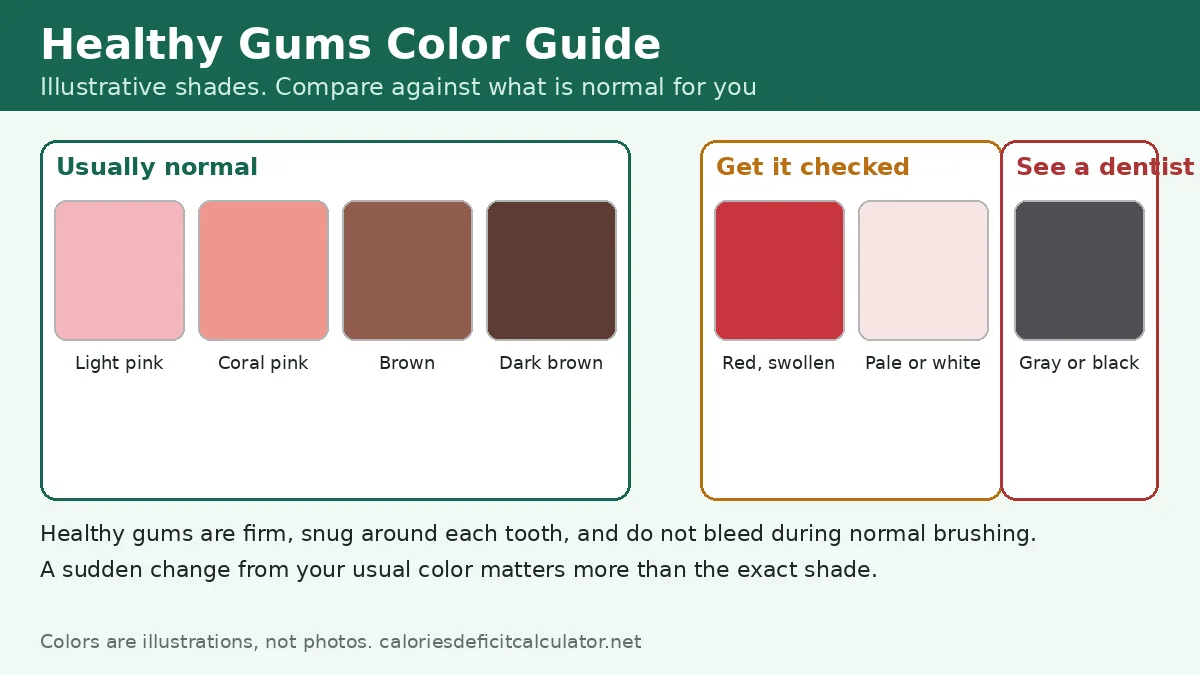
What do healthy gums look like? They’re firm, snug around each tooth, and an even shade of pink or brown that’s normal for you. They don’t bleed when you brush or floss. Healthy gums color varies with natural pigmentation, so a sudden change matters more than the exact shade.
Pale or white patches deserve attention, because pale gums can point to anemia. This guide shows how to check your gums at home, what each color can mean, and when to call a dentist or doctor.
Quick Answer: What Do Healthy Gums Look Like?
| Sign | Healthy gums | What to watch |
|---|---|---|
| Color | Light pink to brown, even across the mouth | Sudden red, pale, white or dark patches |
| Texture | Firm, slightly dotted like an orange peel | Puffy, shiny or soft |
| Fit | Snug around each tooth | Pulling away, teeth that look longer |
| Shape | Pointed gum tips fill the spaces between teeth | Blunt, swollen or flattened tips |
| Bleeding | None with normal brushing and flossing | Bleeds easily or often |
| Comfort | Pain-free | Tender or sore |
| Breath | No lasting odor | Persistent bad breath |
What Is the Normal Healthy Gums Color?
There’s no single correct healthy gums color. Most people think of pink, but normal gums can range from light pink to coral to deep brown. What matters is that the color is even and matches what’s normal for you.
Pink Gums
Pink gums are healthy when they’re firm, comfortable and free of bleeding or swelling. Shades differ from person to person.
Brown or Dark Gums
Natural melanin colors your gums the same way it colors your skin. Brown or dark gums can be completely healthy.
Are dark or brown gums normal?
Yes, if they’ve always looked that way and aren’t swollen, sore or bleeding. Have a dentist check any new dark spot or a patch that’s changing.
Healthy Teeth and Gums: The Full Checklist
Healthy teeth and gums work as a team. Your gums hold your teeth in place and protect the bone underneath. Check for all of these:
- Gums are firm and an even color
- Gums sit snugly at the base of each tooth
- No bleeding during normal brushing or flossing
- No swelling, tenderness or pus
- No gum recession or longer-looking teeth
- No loose or shifting teeth
- No bad breath that won’t go away
Your dentist can also measure the gap between tooth and gum. About 1 to 3 millimeters is considered healthy, and deeper pockets can signal gum disease.
Gum Texture, Shape and Fit
So what do healthy gums look like up close? Healthy gums have a slightly dotted surface, called stippling, similar to an orange peel. The edge follows the curve of each tooth, and small points of gum fill the spaces between teeth.
Unhealthy gums often lose that texture. They can look shiny, stretched or puffy.
How to Check Your Gums at Home
Wondering what do healthy gums look like in your own mouth? Try this quick check:
- Stand in bright light with a mirror.
- Pull your lips back and look at the gums on all sides of your teeth.
- Check that the color is even and matches your usual shade.
- Gently press a clean finger on the gum. It should feel firm.
- Brush and floss, then see if there’s bleeding.
- Take a photo once a month to spot changes.
A home check can’t catch everything. Gum disease can develop without pain, so keep your dental visits.

Healthy Gums vs. Gingivitis
If you’re asking what do healthy gums look like compared with gingivitis, the difference is inflammation. Gingivitis is the mildest type of gum disease. The CDC says its signs are red, swollen or easily bleeding gums, and it’s preventable and reversible with good oral hygiene and professional treatment.
| Healthy gums | Gingivitis |
|---|---|
| Even pink or natural brown | Redder or darker than usual |
| Firm | Puffy or swollen |
| No bleeding with normal care | Bleeds when brushing or flossing |
| Comfortable | Tender or sore |
| Fresh breath | Persistent bad breath |
Can you have gum disease if your gums look healthy?
Yes. Early gum disease can cause little or no pain, and some changes happen below the gumline. That’s why a dentist’s exam, which includes measuring the gum pockets, tells you more than a mirror.
Gingivitis vs. Periodontitis
Periodontitis is the more serious stage. It involves bone loss around the teeth, and it’s a leading cause of tooth loss, according to the CDC’s gum disease fast facts. It can be managed and slowed with professional treatment.
The CDC estimates about 42% of US adults aged 30 and over have periodontitis, and about 8% have the severe form.
Unhealthy Gum Colors and What They Can Mean
Color alone can’t diagnose anything, but it’s a useful clue.
| Color or change | What it can mean | What to do |
|---|---|---|
| Red and swollen | Gingivitis or other inflammation | Brush gently, floss daily, book a dental visit |
| Pale or washed out | Anemia or poor blood flow | See a doctor (see below) |
| White patches | Canker sore, yeast infection or a more serious issue | See a dentist if it lasts more than two weeks |
| New dark spot | Pigment change, an old filling mark or other causes | Have a dentist check it |
| Gray or black with pain and a foul smell | A severe gum infection | See a dentist urgently |
Pale Gums in Humans: Causes and Clues
Pale gums in humans mean less blood color is showing through the gum tissue. The most common medical cause is anemia, which means too few healthy red blood cells or too little hemoglobin to carry oxygen.
What Does Pale Gums Mean?
What does pale gums mean for you? Most often it’s a clue that your blood may be low on red cells or hemoglobin. According to the National Heart, Lung, and Blood Institute, common signs of low hemoglobin include pale skin, tongue, gums and nail beds. But gum color is only a clue. A blood test is the only way to confirm it.
Anemia Gums vs Normal
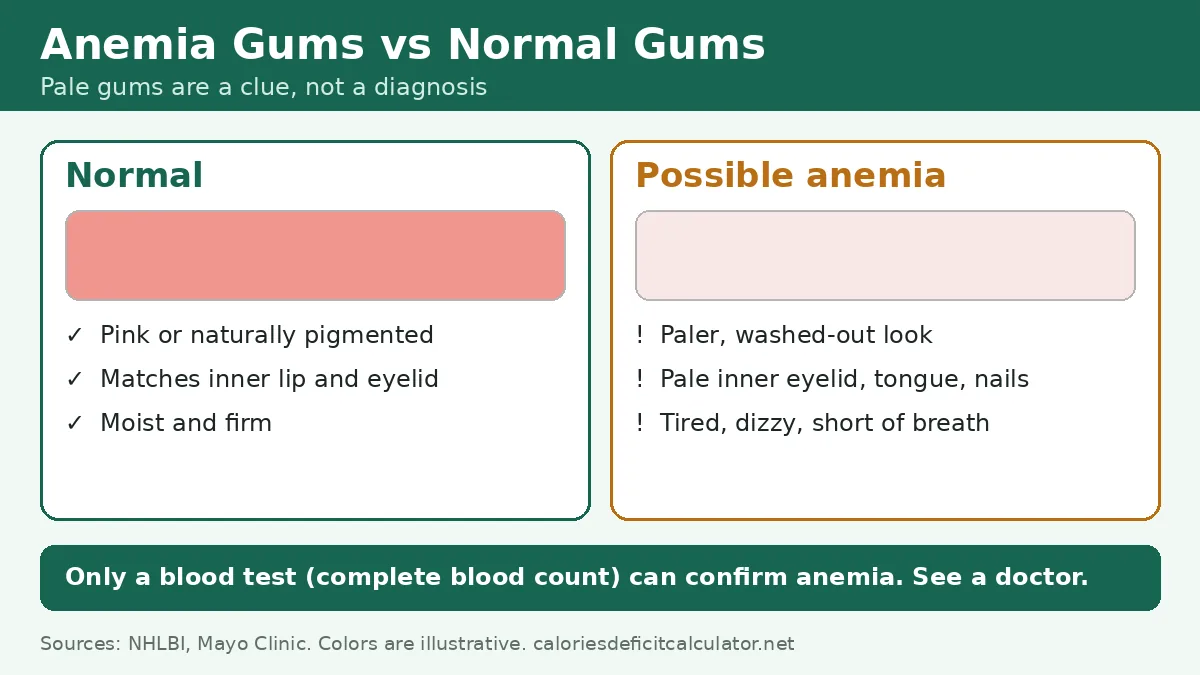
Here’s how anemia gums vs normal gums compare:
| Feature | Normal gums | Possible anemia |
|---|---|---|
| Color | Pink or naturally pigmented | Paler, washed out or whitish |
| Match | Same tone as inner lip and eyelid | Pale inner eyelid, tongue and nail beds too |
| Feel | Moist and firm | Often normal, so don’t rely on feel |
| Other signs | None | Tiredness, dizziness, shortness of breath |
Mild anemia may cause no symptoms at all. Mayo Clinic also notes that paleness can be easier to see on white skin than on Black or brown skin, so checking gums, inner eyelids and nails can help. For more, see Mayo Clinic’s anemia overview.
What Causes Pale Gums?
What do healthy gums look like when your blood is healthy? Pink, moist and evenly colored. These are the common reasons that can change:
- Iron deficiency. Low iron makes it harder to produce red blood cells.
- Low vitamin B12 or folate. Both are needed to make healthy red blood cells.
- Blood loss. The NHLBI says blood loss is the most common cause of anemia, including heavy periods.
- Pregnancy. Blood plasma grows faster than red cells, which can dilute the blood.
- Chronic conditions. Examples include chronic kidney disease and some digestive conditions.
- Smoking. It reduces blood flow to the gums.
Other Symptoms That Go With Pale Gums
Common anemia symptoms include fatigue, shortness of breath, dizziness, headaches, cold hands and feet, and pale skin. Get urgent help if you have chest pain, severe shortness of breath or fainting.
Anemia Cutoffs From WHO (2024)
Doctors use hemoglobin levels to diagnose anemia. The WHO’s 2024 guideline sets these adult cutoffs:
| Group | Anemia if hemoglobin is below |
|---|---|
| Men | 13.0 g/dL |
| Non-pregnant women | 12.0 g/dL |
| Pregnant, 1st trimester | 11.0 g/dL |
| Pregnant, 2nd trimester | 10.5 g/dL |
| Pregnant, 3rd trimester | 11.0 g/dL |
Smoking and living at high altitude can change the adjusted cutoff, so let your doctor interpret your result.
What to Do About Pale Gums
Book an appointment with a doctor. They’ll ask about your symptoms and usually order a complete blood count (CBC). Treatment depends on the cause, such as iron or B12 for a deficiency. Ask before starting iron pills, since too much iron can be harmful.
What Affects Gum Health
- Plaque and tartar. Plaque is the main cause of gum disease.
- Tobacco and vaping. They weaken healing and reduce blood flow.
- Hormonal changes. Pregnancy, puberty and menopause can make gums more sensitive.
- Health conditions. Diabetes makes infections harder to control.
- Stress and teeth grinding. Both can strain gum tissue.
- Medications. Some cause dry mouth, which lets bacteria build up.
How to Keep Healthy Teeth and Gums
- Brush twice a day with fluoride toothpaste and a soft brush angled at the gumline.
- Floss daily to clean between teeth.
- Brush gently. Hard brushing can damage gum tissue.
- Skip tobacco and vaping.
- Get professional cleanings. Hardened tartar can only be removed by a dental team.
- Limit sugary snacks and drinks. For smarter swaps, see our guide to healthy fast food orders.
Should healthy gums bleed when you floss?
Not routinely. A little bleeding can happen when you restart flossing, and it often improves within one to two weeks of gentle, consistent care. If bleeding continues beyond two weeks, see a dentist.
Foods and Nutrients That Support Your Gums
A balanced diet helps control inflammation and supports tissue repair. Iron-rich foods, such as beans, lentils and lean meat, and B12 and folate help your blood. Vitamin C also matters, since severe deficiency causes swollen, bleeding gums.
If you’re dieting, avoid extreme calorie cuts, which can make it harder to get enough nutrients. Read what your calorie deficit should be and check your daily needs with the daily calorie calculator.
Gum Health and Whole-Body Health: What’s New in 2026
Research keeps linking gum disease with other conditions. These links show association, not proof of cause.
- Diabetes and heart disease. A February 2026 Journal of Periodontology study of nearly 265,000 adults from nine dental schools found people with diabetes or cardiovascular disease had more than double the risk of severe periodontitis.
- Heart valves. A study presented at the American Heart Association’s 2026 Basic Cardiovascular Sciences Sessions suggested gum disease bacteria may trigger inflammation tied to aortic valve hardening. It’s early research.
- Arteries. An AHA newsroom report linked gum disease with arterial plaque and a higher risk of major cardiovascular events.
When to See a Dentist or a Doctor
See a dentist if you notice:
- Bleeding that lasts more than two weeks
- Red, swollen or tender gums
- Receding gums or teeth that look longer
- Persistent bad breath
- Loose teeth
- A white patch that doesn’t go away within two weeks
See a doctor if you have:
- Pale gums with tiredness, dizziness or shortness of breath
- Heavy periods along with pale gums
Get urgent care for chest pain, severe breathlessness or fainting.
Common Gum Care Mistakes
- Judging by color alone. Compare with your own normal, not someone else’s.
- Brushing too hard. It can wear gum tissue and enamel.
- Skipping floss because gums bleed. Gentle flossing usually helps.
- Ignoring pale gums. Get a blood test.
- Taking iron without testing. Confirm the cause first.
Healthy Gums Checklist
- Even pink or brown color
- Firm, snug, no bleeding
- No swelling, pain or recession
- Fresh breath
- Brushing twice and flossing daily
- Dental visits on schedule
Frequently Asked Questions
What color are healthy gums?
Healthy gums can be light pink, coral, brown or dark brown, depending on natural pigmentation. The color should be even and match your usual shade.
What do unhealthy gums look like?
They may look red, dark, swollen or shiny. They can bleed, feel sore, pull away from teeth, or come with persistent bad breath.
Is gingivitis reversible?
Yes. The CDC says gingivitis is reversible with good oral hygiene and professional treatment. Periodontitis can be managed but not fully reversed.
Can brushing too hard hurt my gums?
Yes. Hard brushing can damage gum tissue and wear enamel near the gumline. Use a soft brush and gentle strokes.
Can you check for anemia by looking at your gums?
It can hint at it, but it can’t confirm it. Pale gums, inner eyelids and nails are clues, and only a blood test confirms anemia.
Are pale gums an emergency?
Not always, but don’t ignore them. Book a doctor visit soon. Seek urgent care if pale gums come with chest pain, severe breathlessness or fainting.
How long do gums take to heal?
Early gingivitis often improves within one to two weeks of consistent brushing and flossing. If tartar is present, you may need a professional cleaning first.
Conclusion
So, what do healthy gums look like? They’re firm, snug, comfortable and an even shade of pink or brown that’s normal for you, and they don’t bleed with regular care. Know your own baseline, and act when it changes.
Red, swollen or bleeding gums need a dentist. Pale gums, especially with tiredness or breathlessness, need a doctor and a blood test. Keep up daily brushing, flossing and regular cleanings to protect your teeth and gums.
Sources Checked
CDC gum disease fast facts and periodontitis prevalence data; NHLBI anemia signs and causes; Mayo Clinic anemia overview; WHO 2024 hemoglobin cutoffs guideline; Journal of Periodontology (February 2026) study coverage; American Heart Association 2026 Basic Cardiovascular Sciences Sessions coverage; AHA newsroom gum disease report; competitor guides from Penn Dental Medicine, Aspen Dental and Periodontal Health Center (2026).
This article is for general information and isn’t medical or dental advice. See a dentist or doctor about any change in your gums.
Writer Box
Frances Wyatt – Frances Wyatt is a nutrition writer specializing in healthy eating, balanced diets, and everyday nutrition. She focuses on making nutrition science easy to understand, helping readers make informed food choices and build healthier eating habits through practical, evidence-based guidance.




One Comment